Appendix

- Executive summary
- | Introduction
- | Sustainability risks and allocative harms
- | A taxonomy of AI for sustainability sciences
- | AI for sustainability sciences – a literature review
- | Preparing for a future of interconnected shocks
- | Understanding a complex earth system
- | Stewarding our blue planet
- | Securing freshwater for all
- | Enhancing nature's contributions to people
- | Prospering on an urban planet
- | Improving sustainability science communication
- | Collective decisions for a planet under pressure
- | Conclusions and recommendations
- | Appendix
Explore all chapters
- Executive summary
- Introduction
- Sustainability risks and allocative harms
- A taxonomy of AI for sustainability sciences
- AI for sustainability sciences – a literature review
- Preparing for a future of interconnected shocks
- Understanding a complex earth system
- Stewarding our blue planet
- Securing freshwater for all
- Enhancing nature's contributions to people
- Prospering on an urban planet
- Improving sustainability science communication
- Collective decisions for a planet under pressure
- Conclusions and recommendations
- Appendix
Share
News & events
-
Research story | 2026-09-14
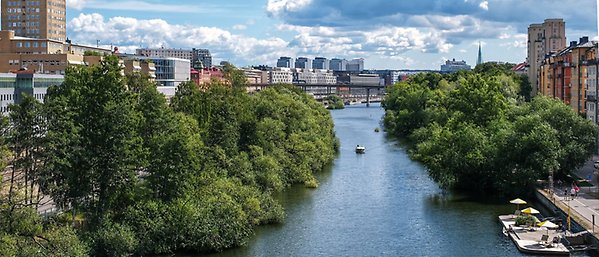
Coordinated reforms can transform Sweden and create well-being beyond growth
The climate crisis and increasing resource consumption raise questions about how high-income countries can reduce their environmental impact without simultaneously increasing unemployment and inequality.
-
.png)
Research story | 2026-09-11
Three ways to navigate the green backlash
Transformations towards sustainability have recently triggered a backlash that coincides with political polarization, violent conflict and democratic backsliding. New research by Per Olsson and Michele-Lee Moore together with Peter Søgaard Jørgensen and Carl Folke identifies three ways that can help keep transformations on track: Hope, Hospicing and Radical collaboration.
-
Research story | 2026-09-08
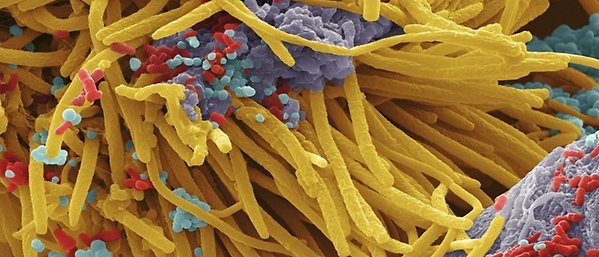
The biosphere is not only around you. It’s within you
Human beings constantly interact with their surroundings as part of the biosphere. But the biosphere doesn’t just stay on the outside. It is also in our guts, on our skin and in our breathing, shows a new scientific article from the Centre and Anthropocene Laboratory at the Royal Swedish Academy of Sciences.
-

General news | 2026-08-27
Glacier disaster highlights growing risks from a destabilising cryosphere
The devastating glacier-related Nepal floods underline the growing risks associated with a rapidly changing cryosphere. The cryosphere refers to all the frozen components of the planet, including ice, permafrost and snow cover. It is one of the most climate-sensitive parts of the Earth system, and it is experiencing widespread, accelerated, and partly irreversible changes.
-

General news | 2026-08-18
Johan Rockström: Sweden can become a fossil-free welfare economy
If Sweden becomes one of the world’s first fossil-free welfare economies, it would send a powerful signal that climate action and a thriving economy can go hand in hand.
-

General news | 2026-08-13
As Europe burns, water retention emerges as a critical climate solution
Europe is experiencing another summer of record-breaking heat, drought and wildfires. According to Centre researcher Thomas Elmqvist, the situation underscores the urgent need to reduce carbon emissions, but also to invest in climate adaptation.