Intertwined with the biosphere
The biosphere is not only around you. It’s within you
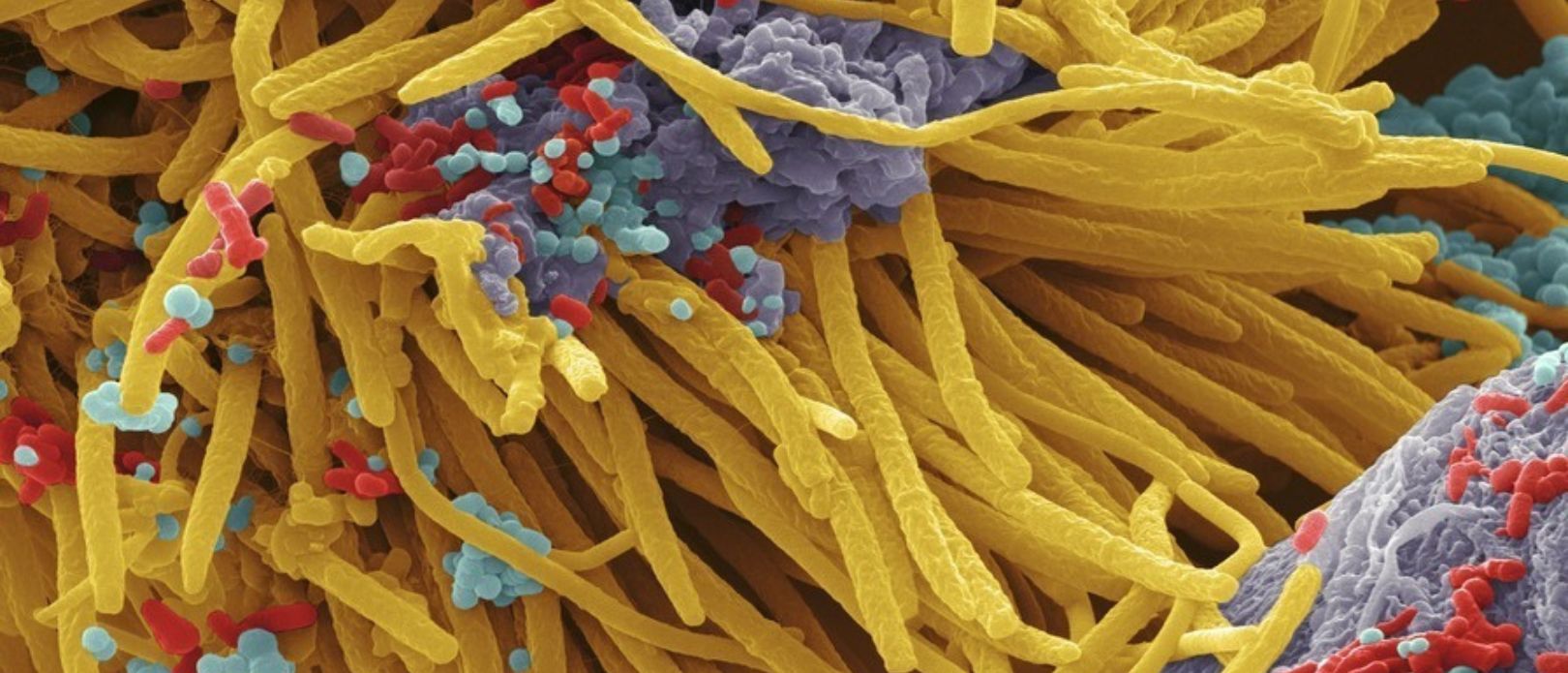
Coloured scanning electron micrograph (SEM) of mixed oral bacteria. The mouth contains a large number of bacteria, most of which are harmless or even beneficial.
Human beings constantly interact with their surroundings as part of the biosphere. But the biosphere doesn’t just stay on the outside. It is also in our guts, on our skin and in our breathing, shows a new scientific article from the Centre and Anthropocene Laboratory at the Royal Swedish Academy of Sciences.
The article describes how these vital interactions function, providing knowledge that can play an important role in dealing with disruptions to this delicate balance caused by climate change and biodiversity loss.
What does being intertwined with nature entail? A group of researchers and an artist have collaborated in a new study from the Anthropocene Laboratory at the Royal Swedish Academy of Sciences, to demonstrate how the human body works as an open, living system that constantly interacts with its surroundings.
Beginning to understand
“Humanity is completely dependent on a living biosphere, and we are intertwined within a system that affects our gut, our skin and our breathing, as well as our food and our water. Soils, plants and animals provide and transport essential functions for us every day, but we are only just beginning to understand these interactions and how we can support them,” says Centre founder Carl Folke, lead author of the article published today in the environmental science journal Ambio.
The study shows how organisms – from bacteria and fungi to birds and whales – interact in the web of life, which carries the flow of chemical elements and nutrients that are essential to human wellbeing and bodily functioning.
Vital for our health
Carl Folke gives an example of how soil microorganisms help humans absorb trace elements that are vital for our health. When water evaporates from forests in one part of the world, it ensures agricultural production in another. And nutrients from the deep oceans are incorporated in the fish and shellfish we eat.
The challenges entailed by an increasingly changing biosphere – in which chemical pollution, climate change and biodiversity loss are reshaping living systems – also mean alterations in the fragile conditions for human life. However, a deeper understanding of how humanity is intertwined with these systems can help us find ways to better care for our planet, as well as the many invisible relationships that nourish and build our bodies.
 Zoom image
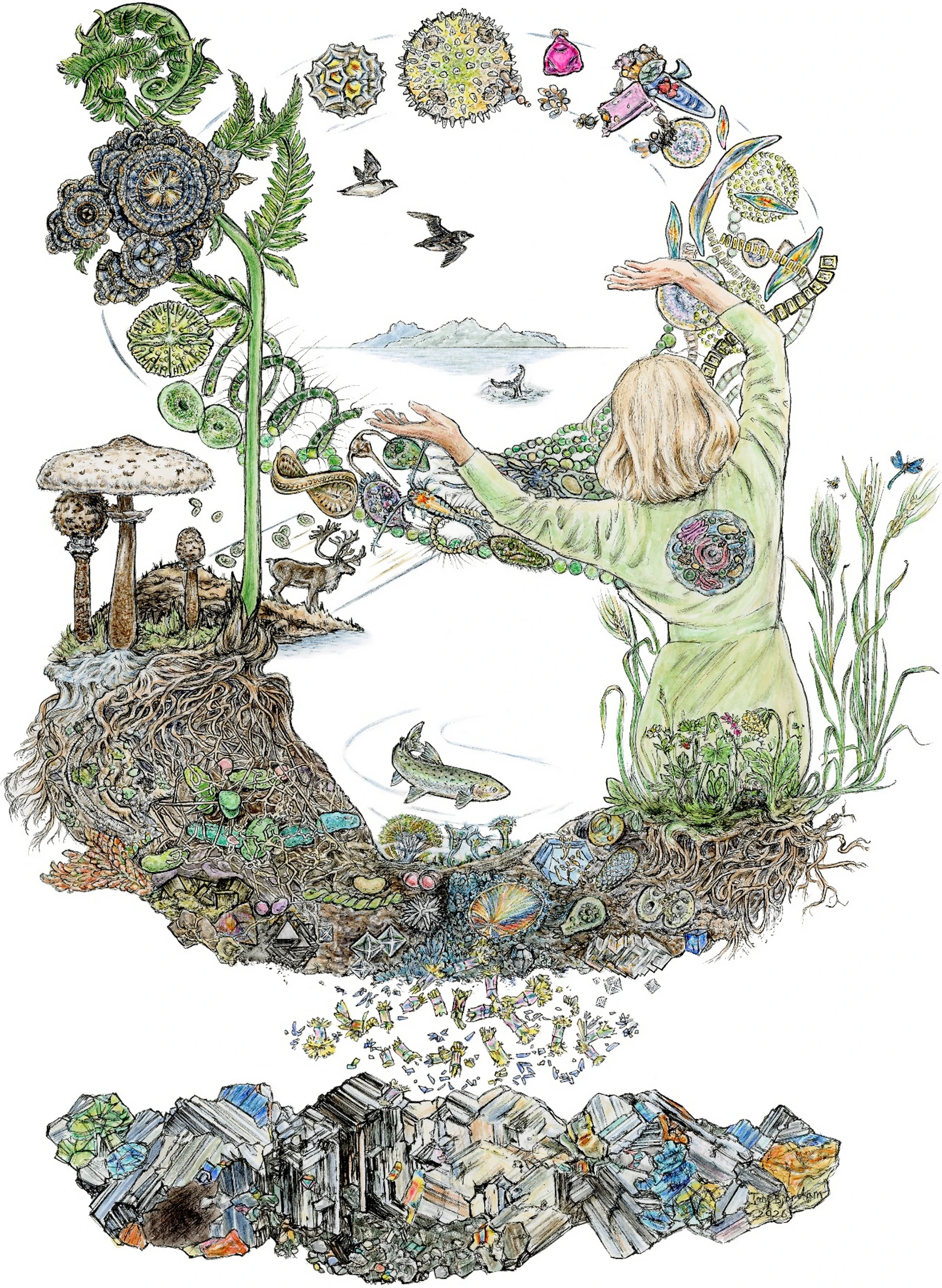
The study also features a new artwork by Tone Bjordam, which illustrates much of what is summarised in the article. Source: Ambio
“Alongside international colleagues from the social sciences, natural sciences, humanities, medicine and the arts, we have worked to bring together scientific knowledge from a range of disciplines and provide a comprehensive picture of humanity’s relationships with other organisms and chemical elements. Seeing how different disciplines approach these crucial questions of survival is incredibly exciting,” says Centre professor Henrik Österblom, director of the Anthropocene Laboratory.
Folke, C., Hattle, A., Jørgensen, P.S, Österblom, H., Bjordam, T., Bratman, G., Lashus, C., Normark, S., Wang-Erlandsson, L., Daily, G., Donges, J., Galbraith, E., Jobbágy, E., König, A., Milani, T., Nyström, M., Reyers, B., Rocha, J., Rockström, J. & Schill, C. 2026. Humans: Intertwined with life and the basic elements in the Anthropocene biosphere. Ambio 55, 2295–2320
Use of AI in this web news
The creation of this web news has been supported by the use of generative AI. We use AI tools to help edit, draft and spellcheck parts of our web news. The final text has been read and approved by at least one of the researchers behind the original study.
Read more about how we use AI in communications »