Greentopia
Johan Rockström: Sweden can become a fossil-free welfare economy
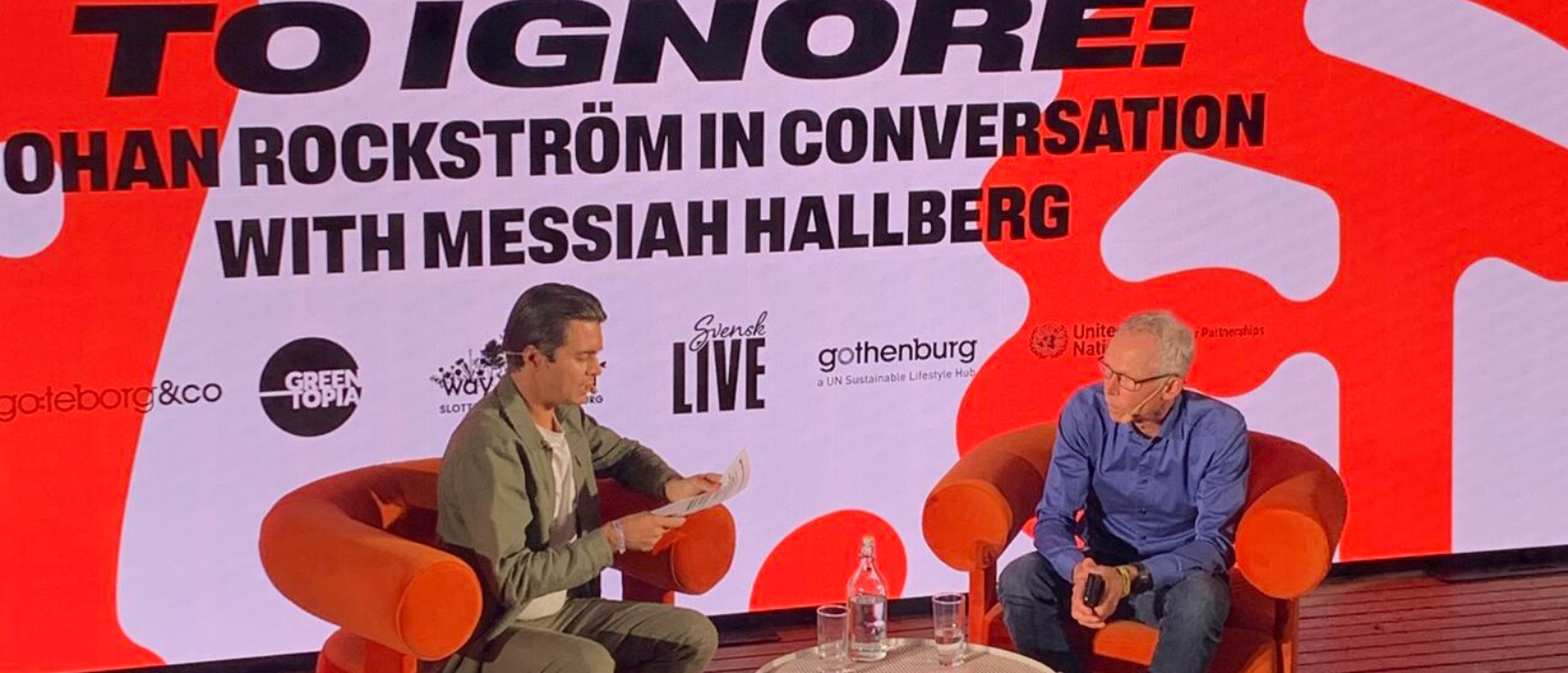
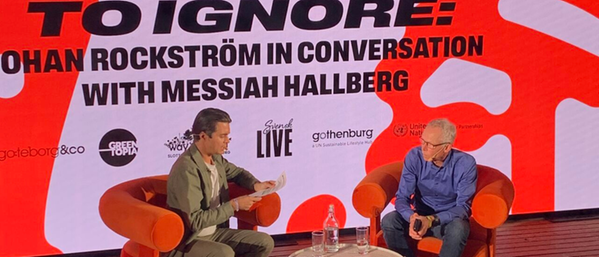
“Nature is not separate from the economy. It is the foundation of every economy,” said Johan Rockström during the Greentopia intiative at Way Out West 2026. Photo by: Stockholm Resilience Centre
If Sweden becomes one of the world’s first fossil-free welfare economies, it would send a powerful signal that climate action and a thriving economy can go hand in hand.
“The challenge is no longer a lack of solutions – the challenge is whether we are politically capable of implementing them,” said co-founder Johan Rockström, speaking at the Way Out West music festival in Gothenburg.
Extreme heat, prolonged drought, and destructive wildfires are unfolding faster and with greater intensity than many scientists anticipated.
“We cannot attribute every individual fire directly to climate change, but the extreme heat conditions that make these fires larger, more frequent, and more destructive are clearly driven by human-caused climate change,” said Rockström.
Natural climate variability, including phenomena such as El Niño, still plays a role. However, these natural cycles are now amplified by a warming planet.
“There is not a single weather event today that occurs in the same climate system as before. Human influence is everywhere.”
The concern extends beyond individual disasters. The Earth has until now helped buffer humanity’s emissions through its oceans, forests, and other ecosystems, which absorb roughly half of the carbon dioxide released from burning fossil fuels.
“The worry is that we are approaching a point where the planet can no longer keep up,” Rockström warned.
A planetary crisis is an economic crisis
Climate change is often framed as an environmental challenge. But Rockström emphasised that it is equally an economic one. Recent economic analyses show that climate disruption threatens trade routes, agriculture, water systems, and infrastructure, potentially reducing incomes dramatically in many regions. Low water levels in major European rivers, such as the Rhine and Danube, are already disrupting transport and economic activity.
“Nature is not separate from the economy. It is the foundation of every economy.”
Failing to protect natural ecosystems and the climate therefore means undermining the systems that support prosperity, stability, and human well-being.
The public is ready. Politics must catch up.
One of Rockström’s strongest messages concerned political leadership. Research consistently shows that a clear majority of citizens support stronger climate action. Many businesses, industries, investors, and insurance companies have already begun adapting to a low-carbon future. Yet political progress often lags behind.
He argued that short-term political calculations, populism, and nationalism have too often overshadowed the long-term decisions required to protect societies from climate risks.
Climate action, he noted, should not be viewed through a partisan lens.
“Climate and the environment is not a left-wing issue. It is a question of safeguarding the foundations of society and the economy.”
Why Sweden matters
Rockström also challenged the common argument that Sweden’s emissions are too small to make a difference globally.
“We are 195 countries sharing one atmosphere. Every country must reach net zero.”
Rather than seeing itself as insignificant, Sweden has an opportunity to lead, he emphasised. Becoming one of the world’s first fossil-free welfare economies would send a powerful signal that climate action and a thriving economy can go hand in hand.
“Leadership creates momentum. Countries that move first become examples for others.”
The coming Swedish election is a critical moment
Looking ahead, Rockström stressed that political choices made in the coming years will be decisive.
“The Swedish election is extremely important.”
The scientific diagnosis is clear. Unlike in many crises in history, humanity now possesses the technology, knowledge, and economic tools needed to act.
Using a medical analogy, Rockström described climate change as a chronic illness affecting the planet.
“For the first time, we have effective treatment. We know what needs to be done.”
The task now is making sustainable choices easy, affordable, and attractive for everyone, not just for a committed minority.
Despite the severity of the challenge, Rockström ended on a note of optimism.
“The transition can succeed. Failure is a choice, not inevitability.”
Use of AI in this web news
The creation of this web news has been supported by the use of generative AI. We use AI tools to help edit, draft and spellcheck parts of our web news. The final text has been read and approved by one of the researchers behind the original study.
Read more about how we use AI in communications »
-
.png)
“Fixing the food system is the smartest economic play we can make”
Festivals can help repair broken food systems. A Swedish rock band transformed into a food truck is leading the way. This year’s edition of “Greentopia”, held at the Way Out West music festival, focused on how food, music and events can help us to stay within planetary boundaries.
-

“Artists like Taylor Swift should tell fans to be stewards of the plan...
Artists, music companies and festivals can play an important role in addressing climate change.