- Cultural evolution
- Human cooperation
- Marine ecosystems
- Ocean stewardship
- Seabird ecology
- Sustainability Science
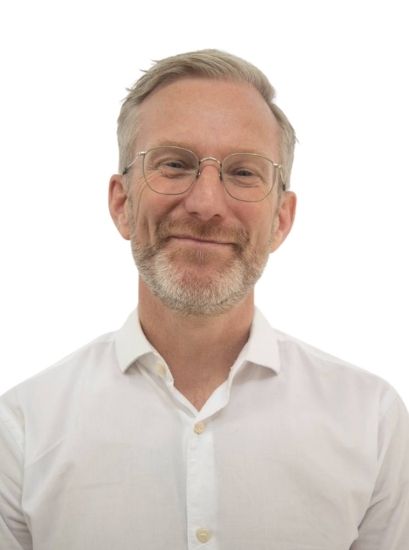
Henrik Österblom is professor at the Royal Swedish Academy of Sciences and at Stockholm University. His work engages with major sustainability challenges
Henrik Österblom is professor of the Royal Swedish Academy of Sciences, where he was appointed the inaugural director of the Anthropocene Laboratory in 2022. He is a member of the scientific advisory council to the RIKEN Institute in Japan (2023-2025) and has been chairing the Natural Capital Partnership Committee at Stanford University since 2022. Henrik has served as scientific advisor to the SARAS Institute in Uruguay (2016-2023).
He was promoted to professor of Environmental Science at Stockholm University in 2018 and served as Science Director of the Stockholm Resilience Centre 2019-2022. He has been a visiting scientist and visiting professor at Tokyo University in 2017 and 2021. Österblom has a master’s degree in behavioural ecology from Uppsala University (1998) and a PhD in marine ecology from Stockholm University (2006). He did his postdoc at the University of Tasmania and the University of British Columbia (2009-2010).
He has co-developed the Seafood Business for Ocean Stewardship (SeaBOS) initiative, a collaboration between some of the largest seafood corporations in the world and science, with an aim to develop an improved stewardship of the ocean. He is the chairman of the SeaBOS fundraising foundation (2019-). Henrik has served as policy advisor to the Swedish Government (2002-2006) and has been expert advisor on ocean equity to fourteen heads of state in the High Level Panel for a Sustainable Ocean Economy (2018-2020).
His research focuses on human cooperation and new solutions to global sustainability challenges, with a particular focus on the dynamics of ocean systems, co-production with private corporations, and exploration of human-nature relationships with artists.
Awards and achievements
- Sweden Impact Award (2017)
- The Askö Young Scientist Award, Stockholm University (2011)
Current funding
- Marianne and Marcus Wallenberg Foundation
Supervision
Frida Bengtsson PhD Main supervisor
Key publications
Österblom, H., Folke, C., Rocha, J., Bebbington, J., Blasiak, R., Jouffray, J.-B., Selig, E. R., Wabnitz, C.C.C., Bengtsson, F., Crona, B., Gupta, R., Henriksson, P. J. G., Johansson, K.A., Merrie, A., Nakayama, S., Ortuño Crespo, G., Rockström, J., Schultz, L., Sobkowiak, M., Søgaard Jørgensen, P., Spijkers, J., Troell, M., Villarubia-Gómez, P., Lubchenco, J. (2022) Scientific mobilization of keystone actors for biosphere stewardship. Scientific Reports 12: 3802 https://doi.org/10.1038/s41598-022-07023-8
Österblom, H., Bebbington, J., Blasiak, R., Sobkowiak, M., Folke, C. (2022) Transnational Corporations, Biosphere Stewardship, and Sustainable Futures. Annual Review of Environment and Resources 47: 609-635 https://doi.org/10.1146/annurev-environ-120120-052845
Österblom, H., Paasche, Ø. (2021) Earth Altruism. One Earth 4 (10): 1386-1397. https://doi.org/10.1016/j.oneear.2021.09.003
Österblom, H., Wabnitz, C.C.C., Tladi, D., Allison, E.H., Arnaud-Haond, S., Bebbington, J., Bennett, N., Blasiak, R., Boonstra, W., Choudhury, A., Cisneros-Montemayor, A., Daw, T., Fabinyi, M., Franz, N., Harden-Davies, H., Kleiber, D., Lopes, P., McDougall, C., Resosudarmo, B.P. , Selim, S.A. (2020) Towards ocean equity. Blue paper commissioned by the High Level Panel for a Sustainable Ocean Economy. World Resources Institute. Available online at https://oceanpanel.org/publication/towards-ocean-equity/
Paasche, Ø., Österblom, H. (2019) Unsustainable Science. One Earth 1(1): 39-42 https://doi.org/10.1016/j.oneear.2019.08.011
Österblom H. (2019) The World is Yours. The Lancet 391: 528-529 https://doi.org/10.1016/S0140-6736(18)32107-X
Österblom, H., Jouffray, J.B., Folke, C., Crona, B., Merrie, A., Troell, M., Rockström, J. (2015) Transnational Corporations as ‘Keystone Actors’ in Marine Ecosystems. PLOS ONE 10(5): e0127533 https://doi.org/10.1371/journal.pone.0127533
Cury, P. M., Boyd, I. L., Bonhommeau, S., Anker-Nilssen, T., Crawford, R. J. M., Furness, R. W., Mills, J. A., Murphy, E. J., Österblom, H., Paleczny, M., Piatt, J. F., Roux, J.-P., Shannon, L. and Sydeman, W. J. (2011) Global Seabird Response to Forage Fish Depletion, One-Third for the Birds. Science 334:1703-1706. https://doi.org/10.1126/science.1212928