Albert
Norström
PhD
Science Director, Earth Commission;
Associate Professor, Stockholm Resilience Centre;
Science Committee member Programme on Ecosystem Change and Society
+46 8-674 7034
RSS-link
- Social-ecological systems
- Knowledge co-production
- Resilience assessment
- Anthropocene
- Transformations
- Marine and ocean risks
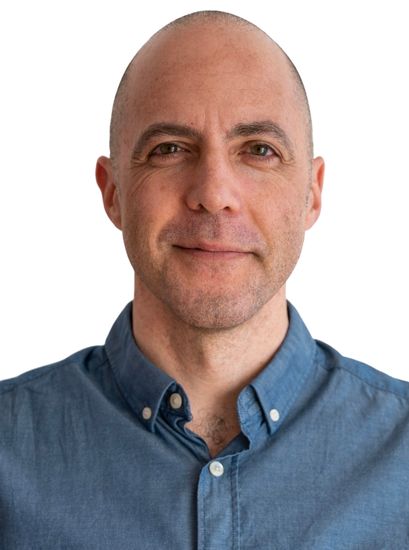
Albert Norström is Science Director at the Earth Commission, Associate Professor at Stockholm Resilience Centre, and serves as a Science Committee member for the Programme on Ecosystem Change and Society.
Currently, Norström is the Science Director at the Earth Commission, while concurrently holding the position of Associate Professor at the Stockholm Resilience Centre and serving as a Science Committee member for the Programme on Ecosystem Change and Society. These roles showcase his commitment to exploring the complexities of our planet's interconnected social-ecological systems and advancing sustainable solutions.
In his prior role, Norström served as the Head of Knowledge for the Global Resilience Partnership (GRP), a collaborative effort comprising over 60 organisations that have joined forces to work together towards a world where people and places can persist, adapt and transform in the face of shocks, uncertainty, and change. The GRP secretariat is hosted by the Stockholm Resilience Centre, Stockholm University.
Norström's background is coral reef ecology, but his ongoing research areas are broad. His current work spans the Safe and just Earth System Boundaries (ESBs), assessing and operationalising resilience, transformation pathways towards sustainable futures, and gender and fisheries in the Global South.
Norström is also heavily engaged in the Seeds of a Good Anthropocene project, which is a suite of research activities that aim to solicit, explore, and develop a suite of alternative, plausible visions of “Good Anthropocenes” – positive visions of futures that are socially and ecologically desirable, just, and sustainable.
Norström served as Executive Director of Future Earth's Programme on Ecosystem Change and Society (PECS) between 2011-2018. PECS integrates research on the stewardship of social–ecological systems, the services they generate, and the relationships among ecosystems, human wellbeing, livelihoods, inequality, and poverty.
Between 2018-2020 he served as the Deputy Director of the Guidance for Resilience in the Anthropocene: Investments for Development (GRAID) programme which was hosted by the Stockholm Resilience Centre (SRC) and funded by the Swedish International Development Cooperation Agency (Sida).
Norström is currently a member of the Scientific Committee of the Future Earth Programme on Ecosystem Change and Society (PECS), and a member of the UNFCCC Race to Resilience technical & methodological expert group.
Awards and achievements
- 2019 recipient of the Ecological Society of America (ESA) Innovation in Sustainability Science Award (together with other co-authors) for the 2016 study "Bright spots: seeds of a good Anthropocene" which was published in 2016 in Frontiers in Ecology and the Environment.
Current funding
- BiodivERsA/FORMAS “Eastern Tropical Pacific reef fish on the move: biodiversity reorganisation and societal consequences”
- Department for Environment, Food and Rural Affairs UK Govt Blue Planet Fund “Ocean risks and vulnerabilities in SIDS and LDCs”
Key publications
Folke, C., R. Biggs, A. V. Norström, B. Reyers, and J. Rockström. 2016. Social-ecological resilience and biosphere-based sustainability science. Ecology and Society 21(3):art41.
Norström, A. V., C. Cvitanovic, M. F. Löf, S. West, C. Wyborn, P. Balvanera, A. T. Bednarek, E. M. Bennett, R. Biggs, A. de Bremond, B. M. Campbell, J. G. Canadell, S. R. Carpenter, C. Folke, E. A. Fulton, O. Gaffney, S. Gelcich, J. Jouffray, M. Leach, M. Le Tissier, B. Martín-López, E. Louder, M. Loutre, A. M. Meadow, H. Nagendra, D. Payne, G. D. Peterson, B. Reyers, R. Scholes, C. I. Speranza, M. Spierenburg, M. Stafford-Smith, M. Tengö, S. van der Hel, I. van Putten, and H. Österblom. 2020. Principles for knowledge co-production in sustainability research. Nature Sustainability 3(3):182–190.
Nyström, M., J.-B. Jouffray, A. V. Norström, B. Crona, P. Søgaard Jørgensen, S. R. Carpenter, Ö. Bodin, V. Galaz, and C. Folke. 2019. Anatomy and resilience of the global production ecosystem. Nature 575(7781):98–108.
Bennett, E. M., M. Solan, R. Biggs, T. McPhearson, A. V. Norström, P. Olsson, L. Pereira, G. D. Peterson, C. Raudsepp-Hearne, F. Biermann, S. R. Carpenter, E. C. Ellis, T. Hichert, V. Galaz, M. Lahsen, M. Milkoreit, B. Martin López, K. a. Nicholas, R. Preiser, G. Vince, J. M. Vervoort, and J. Xu. 2016. Bright spots: seeds of a good Anthropocene. Frontiers in Ecology and the Environment 14(8):441–448.
Jouffray, J., R. Blasiak, A. V. Norström, H. Österblom, and M. Nyström. 2020. The Blue Acceleration: The Trajectory of Human Expansion into the Ocean. One Earth 2(1):43–54.




.jpg)

%20social-resilience-studio.jpg)